
Craniosacral therapy for toddlers
Gentle support for your toddler's growing body.
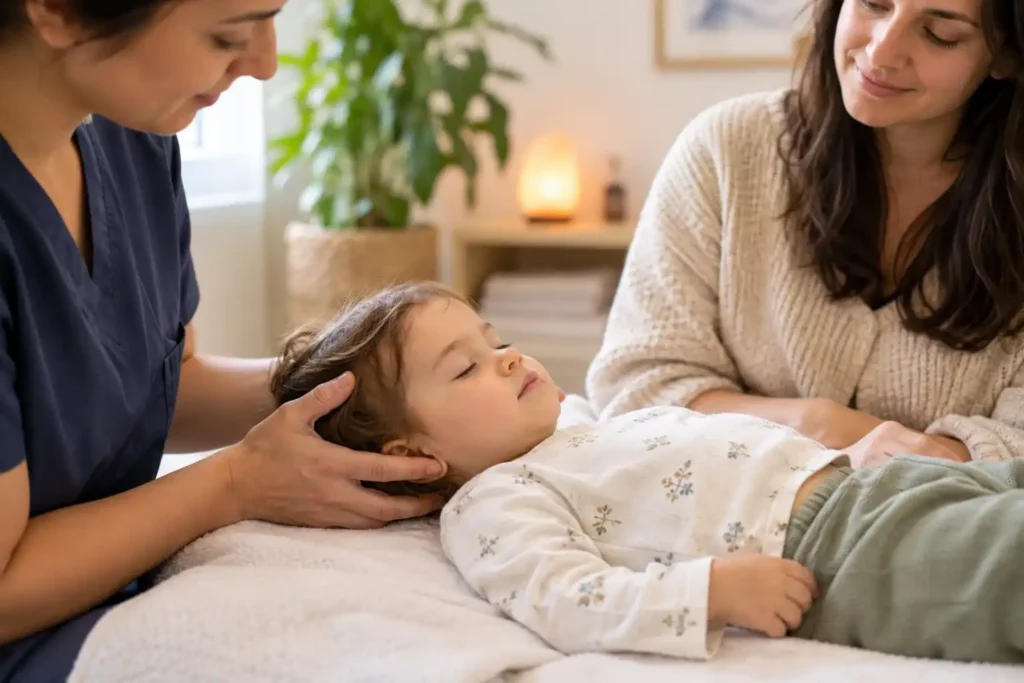
Toddlers are busy people with strong opinions. We meet them where they are, move at their pace, and keep you in the room the whole time.
From milestones and speech to digestion and head shape, our craniosacral therapists and occupational therapist work together to support your child's development.
Reasons for care
What is your toddler going through?
Toddlers with these symptoms often improve within a few sessions of craniosacral therapy, especially when combined with Occupational Therapy or Physiotherapy. If we don't have someone in house who we think your child would benefit seeing, we can refer you to another excellent professional who we trust.
Development and behaviour
- ASD or ADD/ADHD
- Anger management
- Motor delays
- Speech delays
- Picky eating
Sleep, breathing and ears
- Back arching during sleep
- Shallow or mouth breathing
- Chronic ear and sinus infections
- Chronic cough
- Blocked tear ducts
- A strong gag reflex
Head and body
- Flat spots or a misshapen head
- Head turning to one side
- Torticollis or scoliosis
- Breech position at birth
- Head or other injuries
- A broken bone after cast removal
- Growing pains
Feeding, mouth and digestion
- Swallowing difficulties
- Constipation
- Tongue ties
- A high-arch palate
- Crowded teeth
Our speech-language pathologist also supports toddlers with feeding and oral motor challenges.
Birth history
- C-section birth
- Vacuum or forceps delivery
However your child arrived, it is never too late to ask for help.
One sign to watch for
A toddler who crawled with only one leg may benefit from a look.
Occupational therapy, ages 0 to 3
Movement, play and everyday skills.
Our occupational therapist looks at how your child moves, plays, eats and responds to the world, and helps you support them at home. We listen first, advise second.
Concerns we can help with. Not sure which fits? Call us.
Movement and body
- Delays in sitting, rolling, crawling, standing or walking
- Poor body awareness or coordination
Hands and fine motor skills
- Reaching and grasping
- A one-hand preference
- Using both hands together
- Picking up small objects
Feeding
- Moving to solid foods
- Texture intolerance or sensory concerns
- Mild oral motor difficulties
- Understanding hunger cues
Daily life and sensory
- Dressing or potty training
- Processing touch, sound or movement
- Emotional regulation
Social and development
- Joint attention and social interaction
- Whether milestones are on track
- Supporting learning
How sessions feel
Play-based. Learning happens through play, not drills.
A partnership with you. You practise during the session, so you feel confident at home.
Milestone-aware. We know typical development and what deserves attention.
Whole-body. Physical restrictions are addressed alongside, with craniosacral support. We never judge where your child is.
Why combine occupational therapy with craniosacral therapy?
Tension in the neck, or compression from a difficult delivery, can make rolling, sitting and playing harder. Craniosacral therapy releases those restrictions, and occupational therapy builds skills on that new freedom. Both happen under one roof, and your practitioners talk to each other.
Book occupational therapyYour first appointment
What to expect
We start with your story.
A health history and birth story, then gentle assessment and treatment in the same appointment.
Your child sets the pace.
Depending on comfort, the first session may be on the table or on your lap. Preschoolers especially may need a few sessions to warm up. We ask permission before each area and may join in floor play.
You stay in the room.
A child must feel safe at all times. You may go home with calming touch activities, rhythmic movement videos or massage techniques to try.
What to expect over time
A few sessions, not a lifetime.
Results vary. It may take up to 3 sessions to see the best effect, because some tension may date back to before birth. Some children seem calmer right away. Often 3 to 6 treatments over a couple of months resolve the main concern.
Possible benefits include easier emotional regulation, fewer ear infections, better digestion and improved sleep.
Why gentle works
Craniosacral therapy was developed by Dr. John E. Upledger, an osteopathic practitioner. Pressure of about 5 grams, roughly the weight of a nickel, can release tissue, which is why it is gentle enough for toddlers.
Common questions
Questions parents ask us
Anything else on your mind? Call 647-372-0011 and we are happy to talk it through.
Is craniosacral therapy safe for my toddler?
It uses very light touch. You stay in the room the whole time, we ask permission before treating each area, and your practitioner will tell you if something should be checked by your doctor first.
What if my toddler will not stay still?
That is normal. Depending on comfort, the first session may be on the table or on your lap. Preschoolers especially may need a few sessions to warm up, and we may join in floor play.
What happens at the first visit?
We start with a health history and your child's birth story, then gently assess and treat in the same appointment. Your child sets the pace.
How many sessions will my toddler need?
Results vary. It may take up to 3 sessions to see the best effect, and often 3 to 6 treatments over a couple of months resolve the main concern.
Do you offer occupational therapy?
Yes. Our occupational therapist works with children ages 0 to 3 on movement, play, feeding and everyday skills, and can combine that with craniosacral therapy.
Craniosacral therapy for every age
Ready to support your toddler?
Book online any time, or call 647-372-0011 and we'll help you find the right first step. All families welcome.